



As reported by Kompas, the hotel market in Bali during the second half of 2026 reveals a sharp divergence in operational performance across different regions and property classes.
While provincial-level macroeconomic and tourism growth continues, the rate of room absorption has been uneven. The *Bali Hotel Market Risk & Absorption Monitor 2026 Report,” released by PT Hotel Investment Advisory (HIA), notes significant fragmentation in the “absorption balance”—the difference between the growth in occupied room demand and the growth in room supply over the past 12 months.


Sanur recorded the strongest absorption, with a positive balance of +2.7 percentage points, followed by the Jimbaran-Pecatu-Ungasan area at +1.6 percentage points. Both areas posted growth in occupied room demand that outpaced capacity growth. Meanwhile, the opposite trend was observed in other regions: absorption balances contracted by 2.7 percentage points in Nusa Dua and Tanjung Benoa; 3.2 percentage points in Canggu and Seminyak; 7.7 percentage points in Kuta and Legian; and 8.1 percentage points in Ubud. The most severe pressure hit the “Bali Regional Area”—comprising locations outside the six main corridors—where absorption dropped by 31.4 percentage points.
Polarized Room Absorption Cycle
Ross Woods, Founder & CEO of PT Hotel Investment Advisory, explained that Bali is not facing an island-wide oversupply problem, but rather a polarized absorption cycle. “Bali does not face a uniform issue regarding hotel absorption. Some locations are currently experiencing weakening demand, while others remain stable but face a projected surge in new room supply,” said Woods.
Potential Impact of New Room Supply.
The stratification of property classes also influences this operational divergence. The luxury and upper-upscale categories demonstrate resilience in demand and positive Average Daily Rate (ADR) figures. Conversely, the upscale, upper-midscale, midscale, and economy segments have recorded a weakening in actual demand and a decline in Revenue per Available Room (RevPAR). ADR growth in some areas has not yet reflected a recovery in physical room absorption. In Ubud and Canggu-Seminyak, room rate growth has bolstered RevPAR, yet the volume of room nights sold (room-night demand) has declined. Regarding project development, data indicates that approximately 2,460 hotel rooms are under construction as of August 22, 2026.
New Rooms Supply is Unevenly Distributed
Jimbaran-Pecatu-Ungasan bears the heaviest new-room supply load, with approximately 688 rooms scheduled for completion between November 2026 and September 2028.

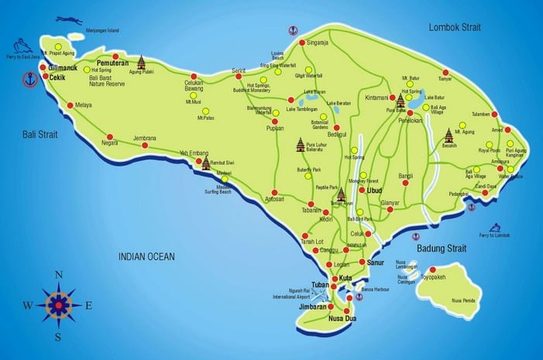
- “Bali Regional Area ” will see the addition of 645 new rooms (completion: November 2026–June 2028).
- Canggu and Seminyak will add 558 new rooms (completion: September 2026–January 2028).
- Ubud will add 361 new upscale or chain-affiliated rooms (completion: November 2026–May 2027).
- Nusa Dua and Tanjung Benoa will add 203 new rooms (completion: October 2026–June 2028).
- Kuta and Legian will add 8 new rooms.
- Sanur will add zero (with no active construction projects).
2027 Occupancy Projections
PT Hotel Investment Advisory probability modeling for the 2027 fiscal year indicates that, under a moderate scenario, most key areas can maintain or improve occupancy rates after accounting for the phased influx of new supply.
- Sanur is projected to record the highest occupancy rate at 84.6 percent.
- Kuta and Legian are projected to record 74.8 percent.
- Nusa Dua is projected to record 74.2 percent.
- Canggu and Seminyak are projected to record 70.6 percent.
- Jimbaran-Pecatu-Ungasan at 68.2 percent.
- Ubud at a declining 61.7 percent.
- Bali Regional at a declining 35.6 percent.
A Downward Risk Scenario Projection
In the event of external pressures or a downside risk scenario, occupancy compression would occur across all corridors.
- Occupancy rates in Ubud could potentially plummet to 47.7 percent.
- Jimbaran-Pecatu-Ungasan area could drop to 50.6 percent.
- The regional average for Bali is projected to fall to 32.5 percent.
“The key investment question right now is not merely whether Bali’s tourism is growing, but rather the probability of each area absorbing its project supply without compromising occupancy rates and pricing power,” said Woods.
These hotel operational conditions align with the revised economic report from Bank Indonesia’s Bali provincial office. In its May 2026 update, Bank Indonesia adjusted the upper limit of its 2026 economic growth projection for Bali to 5.4–5.9 percent, down from the 5.4–6.2 percent forecast made in February 2026. This adjustment to the upper limit indicates a moderation in the tourism sector driven by global geopolitical dynamics, fluctuations in aviation fuel prices, flight route efficiencies, and a slowdown in the recovery of tourist numbers from East Asia.
Bank Indonesia also highlighted that hotel and villa construction continues to expand even as the momentum of private investment fluctuates. Asset owners, developers, and financial institutions are urged to conduct underwriting based on regional risks and property classes, rather than relying on general average growth figures for Bali’s hospitality industry.
Related Links
High Room Occupancy Does Not Guarantee Hotel Profitability in Bali
More Bali Visitors, But Staying for Shorter Periods
Travelers Abandon Bali for New Destinations
Bali to Ban Building More Hotels, Villas, & Restaurants
Bali Hotel Occupancy and Commercial Space Rental Lags
Anomalies in Bali Tourism – Arrivals Increase as Occupancies Plummet
Bali Hotel Occupancies Dive while Luxury Villas Thrive
Governor Koster: No Moratorium on Hotels & Villas
Escalating Overtourism in Bali
Stay Informed on Bali Tourism-Related News: Subscribe to Bali Update