

As reported by NusaBali, many hotels in Bali lack an appropriate emergency preparedness plan. Only about 20 percent of hotels and tourism accommodations in Bali have obtained Disaster Preparedness Certification (SKB).
Ida Bagus Gede Widnyana Putra, Head of the Prevention and Preparedness Division at the Bali Provincial Disaster Management Agency (BPBD), stated that according to BPBD data, only 117 hotels and tourism accommodations have acquired formal disaster preparedness certification.
Those hotels that have secured certification for disaster preparedness are star-rated properties,
”In terms of the percentage of existing hotels or tourism accommodations, only 20 percent of the registered hotels have it,” said Widnyana Putra, speaking at a workshop on developing a recognition mechanism for hotels receiving Disaster Safety Certification (DSC), organized by A-PAD Indonesia at Harris Sunset Road Hotel and Convention Center on Wednesday, 26 August 2026.
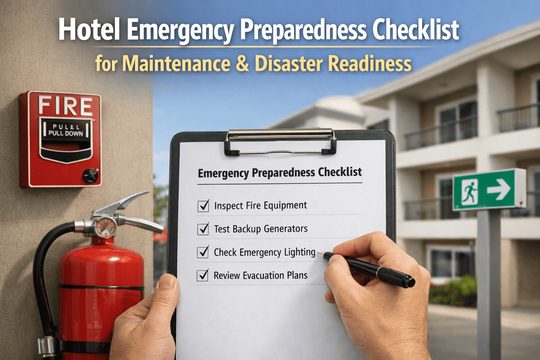
According to Widnyana Putra, the low number of certified hotels cannot be attributed solely to the difficulty of meeting the established disaster-preparedness indicators. The main issue lies in hotel management’s understanding and awareness regarding the importance of disaster risk reduction.
According to the BPBD official, many business operators still do not view disaster preparedness as a priority. Yet, such certification represents an important responsibility for tourism accommodation managers to ensure the safety of employees and tourists in the event of a disaster.
”In terms of understanding or a culture of disaster awareness, not everyone grasps that this is a crucial matter,” he explained.
Widnyana Putra stated that the BPBD continues to conduct outreach programs to improve business operators’ understanding of the importance of disaster risk reduction. Hotels do not have to rush to obtain certification immediately; the process can be carried out in stages, using assessments to identify key areas that require attention.
BPBD continues to work to strengthen the governance of the certification program. Currently, the certification process is free of charge. The government aims to ensure that regulations and technical guidelines are in place before encouraging more hotels to participate in the program. “Since this is free of charge, we are first strengthening the regulatory framework so that, hopefully, it can be funded annually through the government budgets,” he said.
With improved governance and funding, the Bali Regional Disaster Management Agency (BPBD) will increase its promotional efforts and encourage more tourism businesses to participate in the program. This effort is also being carried out through various tourism associations.
Disaster preparedness certification provides added value for hotels amidst the competitive tourism industry. Widnyana Putra stated that several hotels that have already participated in the certification process have also admitted that travel agents are starting to inquire about the certificate, especially for those hotel properties hosting international events.
”Hotels that have already received certification can clearly display the certificate they received from the Province of Bali. This automatically gives travel agents confidence that the hotel is indeed worthy of ensuring the safety and comfort of tourists,” he said.
Of the 117 hotels and accommodations that have been certified, the largest number are in Bali’s Badung Regency.
The certification is valid for five years. However, the BPBD continues to conduct an annual recertification process for hotels participating in the program.

Widnyana Putra emphasized that, based on regulations, SKB certification is no longer merely a voluntary program. This obligation is regulated through regional regulations (perda) and gubernatorial regulations (pergub). However, the lack of sanctions for businesses that haven’t participated in certification is one reason its implementation is less than optimal.
”Regulatory requirements are now mandatory. This is stipulated in regional regulations, followed by gubernatorial regulations. It’s actually mandatory. But the delay may be due to the lack of meaningful sanctions in the regulations,” he emphasized.
In its implementation, SKB certification has several technical specifications that must be met. These standards include safety signs and the location and height of evacuation sites.
Hotels located in tsunami-prone areas, for example, must have appropriate evacuation scenarios. If horizontal evacuation is not possible due to the hotel’s proximity to the coast, vertical evacuation can be carried out to buildings or other locations that meet safe-height tsunami-wave standards.
”We hope that more hotels and tourist accommodations will participate in certification. Besides improving tourist safety, this program is expected to strengthen Bali’s image as a tourist destination that is not only comfortable but also prepared for disaster risks,” he concluded.
Related Links
Earthquake-Tsunami Disaster Readiness Drill Conducted in Bali
Frequency of Earthquakes in Bali on the Increase
Fears Grow Over a Balinese “Cliffhanger”
Stay Informed on Bali Tourism-Related News: Subscribe to Bali Update
